

Exclusive: Why Nvidia Is Turning to Flash for AI Memory
2026-01-12
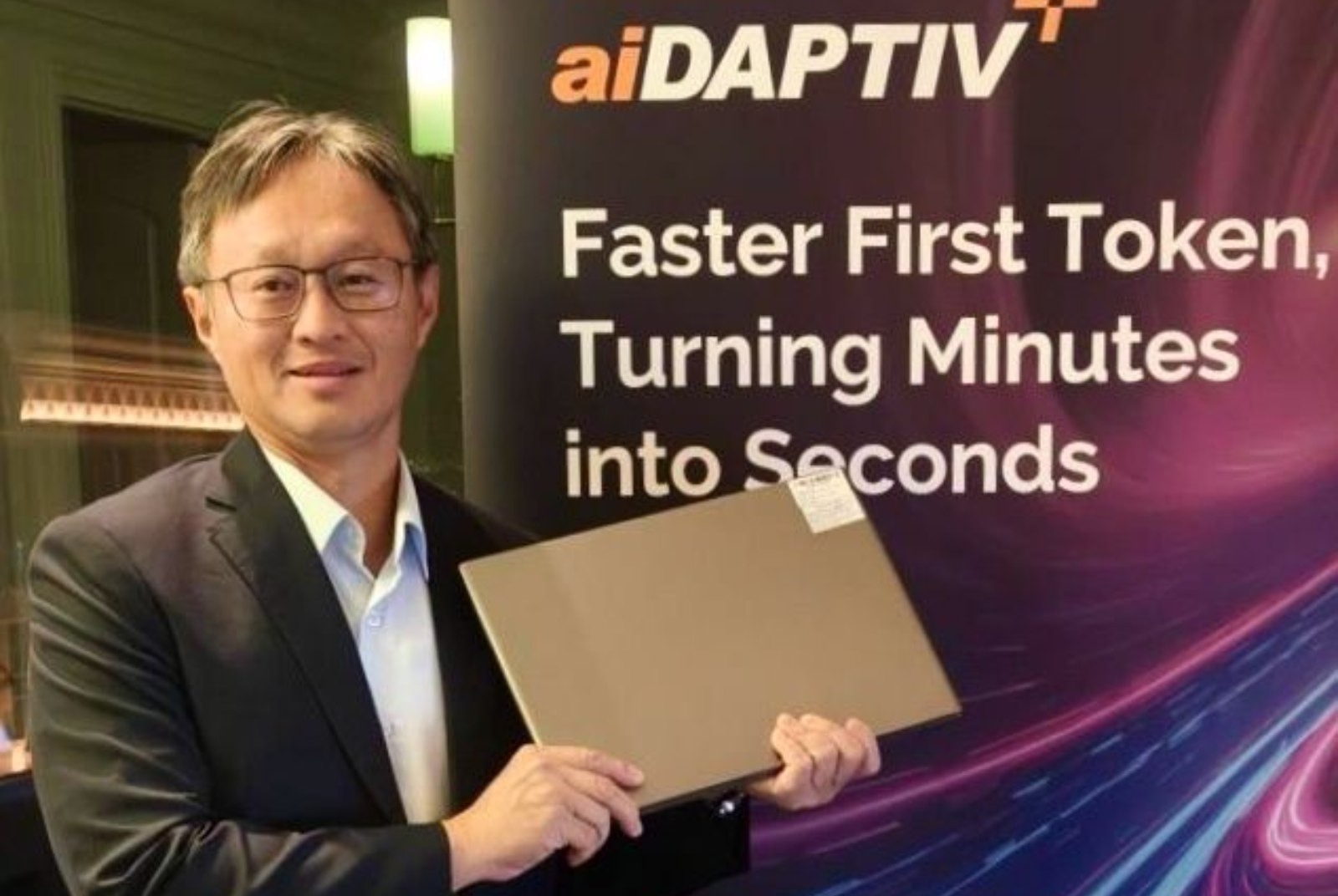
Source:TechTaiwan
At CES 2026, Nvidia revealed a major shift in AI storage—offloading long-term “context memory” from HBM to flash-based SSDs. A surprise cameo by Phison’s chip in Nvidia’s new server sparked market buzz, but CEO K.S. Pua remains cautious about its real impact.
Early Jan. 7 morning, a photograph began circulating among stock-market traders, showing a NAND flash controller IC from Phison inside Nvidia’s newly unveiled Vera Rubin server at CES.
This widely shared “bullish signal” was one of the factors that helped drive Phison shares to their daily limit that day, before a sharp correction on Friday.
When I first saw the image, I immediately thought of something Phison CEO K.S. Pua told me more than two months ago: “In the future, flash memory will become part of AI computing systems—and when that happens, Phison will be part of it.”
Had that prediction really come true so quickly?
In Jensen Huang’s one-hour-and-40-minute keynote at CES, the final ten minutes were devoted to the launch of Nvidia’s fourth-generation BlueField data management system.
One of its key innovations aligns precisely with a direction Phison has invested heavily in over the past several years: offloading part of the storage burden from high-bandwidth memory (HBM) to flash-based solid-state drives (SSDs).
What gets offloaded, Huang explained, is so-called “context memory.”
“That’s the accumulated history of your conversations with AI,” he said. “Over time, you’ll want to preserve those memories forever, right? Initially, that context memory sits in HBM—but eventually, it simply won’t fit anymore.”
The solution, he said, is to move those hard-to-discard memories to a separate storage rack and retrieve them via high-speed networking.
Pointing to the rack on stage, Huang said this approach effectively provides an additional 16TB of storage per GPU.
In a post-keynote earnings call, he elaborated further, describing this new storage architecture—purpose-built for AI key-value (KV) caches and context memory—as something that “will create a market that has never existed before, and could become the largest storage market in the world.”
Several U.S. media outlets noted that it was this “largest in the world” remark that helped ignite this week’s sharp rally in memory-related stocks.
If even part of this new storage demand were to use Phison’s controller ICs, wouldn’t that be a massive windfall for the company?
But when Phison CEO K.S. Pua—who was attending CES—returned my call on 8th Jan, he answered in his usual blunt fashion: no.
Source:Exclusive: Why Nvidia Is Turning to Flash for AI Memory|Industry|2026-01-12|web only